
Top 10 Casino Games That Actually Give You a Shot at Winning
You’re at the blackjack table, your heart pounding as the dealer reveals a ten—and your two cards total twenty, a near-certain win. This is the core of casino games: a direct test of luck and nerve against the house, where every spin of the roulette wheel or pull of a slot lever offers the instant thrill of turning a small wager into a massive payout. The rules are simple—match symbols, beat a hand, or hit a number—but the reward is the powerful, unpredictable rush of a direct chance to multiply your money in seconds. You play to feel that moment of pure victory, the simple promise that your next bet could be the one that changes everything.
Decoding the Core of Table Games
Decoding the core of table games in a casino setting means mastering the house edge and casinous online casino understanding that every bet carries a mathematical probability. At the blackjack felt, the core is the basic strategy, a fixed set of decisions that cuts the house advantage to under 1% when followed perfectly. In roulette, the core is the bet types, where inside wagers offer high payouts but low odds, while even-money bets like red or black offer the best chance of survival. For craps, the core is the pass line bet with odds, as it offers one of the lowest house edges in any game. The player who ignores the specific rules on doubling down or splitting in blackjack loses the core mathematical advantage. Your goal is not to predict luck, but to optimize decisions against fixed odds.
How Card Counting Shifts the Odds in Blackjack
Card counting shifts the odds by transforming the house edge into a player advantage through mathematical tracking. As low cards are removed from the deck, the remaining high cards increase the probability of blackjack and dealer busts, allowing the player to adjust bets accordingly. This technique flips the core dynamic, making the game beatable when the count signals a favorable imbalance. It is not about predicting specific cards, but leveraging statistical shifts to gain a consistent edge. The player’s skill, rather than luck, becomes the dominant factor in determining outcomes over time.

Card counting shifts the odds by converting the house edge into a player advantage through tracking the ratio of high to low cards.
Mastering the Art of Poker Bluffing and Position
In poker, bluffing fails without leveraging position to narrow ranges. Acting later in a round reveals opponents’ intentions, allowing you to bluff when weakness is evident, such as after a check on a dry flop. Position also defines when to value-bet versus semi-bluff with draws; from the button, you can float flops and steal on turn cards. Conversely, bluffing from early position requires a tight, polarized range to succeed. Mastery lies in reading bet sizing and timing tells, then using your seat to manipulate pot odds against specific opponents.
Baccarat’s Low House Edge: Why It Attracts High Rollers
Baccarat’s low house edge directly explains its magnetic pull on high rollers. The Banker bet carries a mere 1.06% house edge, while the Player bet sits at 1.24%, making it one of the most mathematically favorable wagers in the casino. This minimal statistical advantage allows large sums to be wagered with less expected erosion over time, preserving bankroll longevity. Unlike other games where volatility can rapidly deplete funds, baccarat’s edge offers a calculated runway for extended play. This efficiency, combined with high betting limits, creates an environment where serious players can focus on the game’s rhythm rather than fighting a steep house cut.
Baccarat’s low house edge—around 1.06% on Banker—attracts high rollers by minimizing the casino’s statistical advantage, enabling larger bets with slower expected losses.
Spinning Reels and Digital Decks
Spinning Reels are the heart of slot machines, where matching symbols across paylines triggers wins, with features like multipliers and free spins boosting payouts. Digital Decks power virtual table games—blackjack, poker, baccarat—using random number generators to simulate card shuffling, ensuring fair play without physical cards. Mastering the subtle difference between true randomness in digital decks and the weighted probabilities of reel cycles can refine your betting strategy.
Understanding Progressive Jackpots vs. Fixed Payouts
Understanding progressive jackpots versus fixed payouts is critical for strategic play. A fixed payout guarantees a specific prize, such as 1,000 coins for five cherries, regardless of how many players win. In contrast, a progressive jackpot pools a small portion of every bet across linked machines or games, causing the top prize to grow until hit. However, a progressive’s higher variance often means longer losing streaks between wins. To decide:
- Assess your bankroll—fixed payouts suit limited budgets with predictable returns.
- Check each machine’s payout table for base-game odds versus the jackpot’s trigger conditions.
- Monitor the progressive’s current value; larger jackpots mathematically lower your expected value per spin.
Volatility in Slots: Choosing Between Risk and Reward
Slot volatility, often called variance, directly shapes your risk-reward experience. Low volatility slots dish out frequent, smaller wins, keeping your balance steady for longer play sessions. In contrast, high volatility games offer massive jackpots but with long, dry spells between them. Choosing between them hinges on your mood or bankroll size for that session. To decide wisely, follow this sequence:
- Check the slot’s volatility rating in its info panel.
- Match it to your goal—low for extended slot playtime, high for a shot at life-changing rewards.
- Adjust your bet size accordingly, betting smaller on high-volatility reels to survive the droughts.
Video Poker Strategy: Finding the Most Favorable Pay Tables
In video poker, mastering pay table analysis is the definitive skill for advantage play. The critical distinction lies between “full-pay” and “short-pay” versions; for instance, a 9/6 Jacks or Better table (9-for-1 for a full house, 6-for-1 for a flush) returns over 99.5% with perfect strategy, while an 8/5 variant drops to 97.3%. Even a single coin reduction on the full house payout can shift the house edge by over 2%. Always verify the pay table before playing, as machines offering identical game names often hide drastically different theoretical returns, directly impacting your long-term expected loss.
Wheel-Based Action and Number Hunts
Wheel-Based Action and Number Hunts turn slots and roulette into a tactical chase. In this strategy, you track a specific wheel or machine, noting which numbers or symbols haven’t hit in a while. The idea is to “hunt” for that cold number, assuming it’s due for a spin. For roulette, you might watch a physical wheel for repeats or gaps, then bet on a missing number. For slots, you observe a machine’s reels for a long-dormant bonus symbol.
The core insight: betting on a “number hunt” doesn’t change the odds—each spin is independent—but it gives you a structured reason to place your bets, adding a layer of personal strategy and focus to the chaos of the wheel.
This approach keeps you engaged by turning random results into a tangible goal.
European vs. American Roulette: The Single-Zero Advantage
European roulette’s single-zero layout slashes the house edge to 2.70%, a massive improvement over American roulette’s 5.26% due to its extra double-zero pocket. This single-zero advantage directly impacts your bankroll: every 37 spins, European wheels statistically keep only one unit, while American wheels steal nearly three. The practical payoff is immediate when hunting numbers—betting on a single zero gives you a 1 in 37 shot instead of 1 in 38, and even-money bets face half the expected loss. En prison rules on some European tables further cut the edge, making your hunt for single-number hits mathematically kinder.
| Aspect | European (Single Zero) | American (Double Zero) |
|---|---|---|
| House Edge | 2.70% | 5.26% |
| Wheel Pockets | 37 | 38 |
| Even-Money Recovery | En prison option | None (standard) |
Betting Systems Like Martingale and Their Real Risks
The Martingale system, which doubles bets after every loss, is often touted as a safe catch-up strategy during wheel-based number hunts, but its real risks are catastrophic. While chasing a single number, a losing streak quickly escalates wagers beyond table limits or your bankroll, turning a small deficit into a massive loss. The flaw is that exponential bet progression cannot outrun the house edge; a single win only recovers prior losses without long-term profit. This system relies on infinite funds and no table limits, both of which are unrealizable in practice.
- A five-loss streak on a $10 bet forces a $320 wager, risking ruin for a $10 gain.
- Capping tables make the system fail immediately, as you cannot double past the maximum bet.
- Psychological pressure erodes discipline, often leading to reckless recovery bets outside the system.
Live Dealer Roulette: Blending Online Convenience with Physical Wheels
Live Dealer Roulette bridges the gap between virtual play and authentic casino physics by streaming a physical wheel and ball in real time to your device. You place bets via an intuitive digital interface, but the outcome relies on actual spin mechanics—eliminating RNG skepticism. Physical wheel transparency is maintained through multiple camera angles, letting you track the ball’s trajectory. This hybrid format preserves the tactile rhythm of a brick-and-mortar table while letting you resize your betting layout or chat with the croupier.
- Video feed of a real spinning wheel ensures natural ball bounce and speed.
- Betting controls mirror online simplicity, yet results come from physical rotation.
- Full European or American wheel setups with visible rotor and frets.
Dice Games and Their Surprising Depth
In casino contexts, dice games like Craps offer surprising strategic depth beyond mere luck. Understanding the house edge on different bets is critical; for instance, a Pass Line bet carries a low 1.41% edge, while a “Hard Way” prop bet can exceed 9%. The true depth emerges in bankroll management and betting systems, where players adjust wagers based on table conditions and the puck’s status. Recognizing that the dice have no memory but that variance creates short-term patterns allows a practitioner to exploit streaks through disciplined press-and-remove strategies, not by predicting outcomes. This shifts focus from superstition to probabilistic math and comp maximization.
Craps Pass Line Bets vs. Proposition Bets
In craps, the Pass Line bet is your low-house-edge foundation, winning on the come-out roll of 7 or 11, while Proposition Bets are high-risk, single-roll wagers like “Any 7.” The Pass Line survives repeated rolls and builds odds, whereas Prop Bets tempt with big payouts but drain your bankroll fast. A savvy player uses the Pass Line for steady action and limits Prop Bets to a small, fun side bet.
Pass Line offers consistent odds with the house, while Proposition Bets are high-reward, high-risk entertainment for the thrill of a single roll.
Reading the Dice in Sic Bo for Better Payouts
Instead of blind luck, reading the dice in Sic Bo involves tracking hot and cold number patterns for better payouts. By observing the last ten rolls, you can identify which triples or specific totals are overdue, placing bets when probability shifts in your favor. For example, if a specific triple hasn’t hit in 30 rolls, the payout potential climbs dramatically. This approach turns random guessing into a calculated, strategic play for higher returns.
- Focus on “delayed” triple bets that offer 150:1 or 180:1 payouts
- Watch for single number frequency to predict combination bets
- Use small chip increments to capitalize on visible streaks
Why Banker Bets Dominate in Dragon Tiger
The mathematical edge on Banker bets explains their dominance in Dragon Tiger, as the house deducts a small commission from winnings to balance the odds, making it the most strategic choice. Unlike Tie bets, which carry massive house advantages, Banker offers consistent reduced risk and higher probability per round. This reliability attracts experienced players seeking predictable patterns, cementing Banker as the primary wager for maximizing session longevity against the house.

Specialty Games That Break the Mold
Specialty games that break the mold shatter the classic slot and table game formats, offering you pure skill or random chance without complex rules. For example, Kenó functions as a rapid-draw lottery where you pick numbers and watch live ball drops, while games like Crazy Time mix a money wheel with interactive bonus rounds filmed in a studio. A practical tip: read the paytable for each unique game, as volatility and win potential vary wildly. Q: Should you use a strategy in these games? A: No—most rely on RNG, so set a budget and treat them as entertainment, not a skill challenge.
Keno and Its Mathematical Appeal to Casual Players
Keno breaks the mold of standard casino games by offering extreme mathematical simplicity for casual players. You pick numbers, and a machine draws twenty; your payout depends solely on how many match. The house edge is steep, often exceeding 25%, but the appeal lies in the illusion of control. Unlike blackjack’s rigid strategy or slots’ pure chance, Keno lets you choose the numbers, making each loss feel like a near miss. The odds are static, yet the low minimum bets allow extended play sessions. This balance of high variance and ease of calculation creates a unique, low-stakes gamble that rewards pattern-spotting without requiring complex decision-making.
Keno’s appeal is its transparent math: high house edge accepted for cheap, long sessions and the simple thrill of matching chosen numbers.
Bingo Patterns: Speed vs. Coverage
In bingo, your pattern choice is a tactical trade-off between speed and coverage. A single-line pattern lets you scream “Bingo!” fast, but you’re betting on a narrow hit. Conversely, a full-card blackout demands covering every number, which takes longer but offers maximum pattern coverage for bigger wins. The key is matching your pattern to the game’s tempo: quick patterns suit snappy sessions, while coverage patterns grind for that jackpot. How do I decide which pattern to play? Check the prize structure—if early wins pay, go fast; if the pot builds, aim for full coverage and patience.
Scratch Card Psychology: Instant Wins and Loss Disguises

Scratch cards exploit loss disguises brilliantly. Unlike a slot machine spinning to a clear loss, scratch cards often reveal a near-miss—two matching symbols and one that’s just off. Your brain treats this almost like a win, masking the loss and pushing you to buy another. The instant gratification of revealing every icon at once bypasses rational thought, making you ignore net losses. Here’s how the psychology breaks down:
| Instant Win | Dopamine hit from immediate reveal, even on small prizes. |
| Loss Disguise | Near-misses or “free play” icons hide your actual spending. |
Pai Gow Poker: The Slow-Burn Strategy for Frequent Wins
Pai Gow Poker’s slow-burn strategy hinges on splitting your seven cards into two hands—a five-card “high hand” and a two-card “low hand”—with the goal of winning both. Unlike fast-paced casino games, this approach minimizes losses by prioritizing frequent small victories over volatile bets. The core method follows a precise sequence:
- Always set your high hand stronger than your low hand to avoid a “foul” (automatic loss).
- Stack the high hand with the highest possible ranking, even if it slightly weakens the low hand.
- Use a house-way algorithm as a baseline—often pairing your highest card with the lowest in the low hand to create a strong two-card pair.
This deliberate pacing exploits the house’s 2.5% edge by reducing variance, letting you conserve bankroll while securing steady, incremental wins over extended sessions.
What Exactly Are Casino Games and How Do They Work?
Understanding the Core Mechanics Behind Your Favorite Gambling Titles
Random Number Generators: The Engine Ensuring Fair Play
House Edge: What It Is and Why It Matters for Your Bankroll
Key Features That Make Modern Gambling Titles Stand Out
Bonus Rounds and Free Spins: How They Boost Your Winning Potential
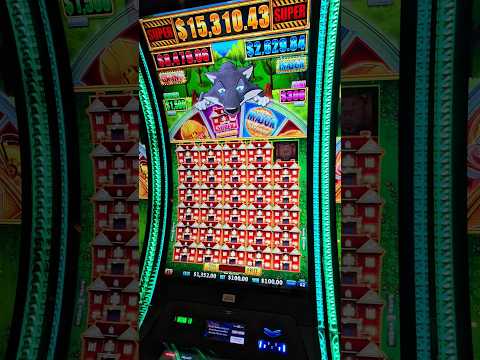
Progressive Jackpots: The Appeal of Life-Changing Payouts
Live Dealer Options: Bringing Real Casino Atmosphere to Your Screen
Practical Tips for Choosing the Right Game for Your Play Style
High RTP vs. High Volatility: Which One Suits Your Goals
Match Your Experience Level: Beginner-Friendly Slots vs. Complex Table Games
Mobile Compatibility: Ensuring Smooth Gameplay on Any Device
